 By Jacob Ella
The flashing lights, clanging slot machines, and energetic crowds of a casino floor create an atmosphere that feels entirely driven by luck, intuition, and superstition. Patrons frequently rely on lucky charms, specific physical rituals, or gut feelings when deciding how to place their wagers. However, beneath the layer of sensory spectacle lies an unyielding, immutable foundation of pure mathematics. Every classic casino card game operates as a live, practical demonstration of probability theory.
Probability is the mathematical branch that measures the likelihood of a specific event occurring, calculated by dividing the number of favorable outcomes by the total number of possible outcomes. In casino gaming, these mathematical frequencies dictate everything from the structural design of the game rules to the specific payouts offered to players. While a short-term session can be highly volatile due to random chance, over a timeline of thousands of card rounds, the laws of probability always manifest with absolute precision. Understanding these mathematical underpinnings is the ultimate tool for shifting your perspective from a reckless gambler to an analytical observer of risk.
The House Edge and the Law of Large Numbers
To understand how casinos remain highly profitable businesses year after year, one must analyze the intersection of the house edge and the Law of Large Numbers. The house edge is the built-in mathematical advantage that the casino retains on every single wager placed on their floor. This edge is explicitly engineered into the rules of each game, ensuring that the payout odds offered to a player are slightly inferior to the true mathematical odds of winning the hand.
The operational success of this business model relies entirely on the Law of Large Numbers, a fundamental theorem of probability. This law dictates that as the total number of independent trials increases, the actual observed percentage of outcomes will draw closer and closer to the theoretical expected percentage.
-
Short-Term Volatility: On a quiet Tuesday night, an individual player might sit down at a card table and win ten consecutive hands, walking away with a massive profit. Over a small sample size, random variance rules supreme.
-
Long-Term Convergence: Across a full year, millions of separate hands are dealt across the casino network. As the sample size explodes into the millions, the erratic short-term wins and losses completely smooth out. The final metric converges precisely on the engineered theoretical house edge, guaranteeing corporate profitability.
Combinatorics and Independent Probability in Blackjack
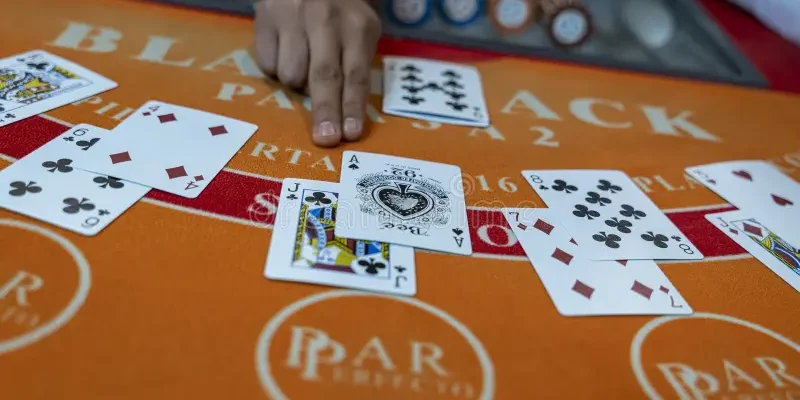
Blackjack is unique among classic casino card games because its mathematical landscape is dynamic rather than static. To calculate probability in blackjack, one must utilize combinatorics, which is the study of counting, arranging, and combining objects within a finite set—in this case, a standard deck of fifty-two cards.
A standard deck consists of four suits, with each suit containing thirteen distinct card ranks. When a shoe is freshly shuffled, the probability of drawing any specific card rank is a direct function of the remaining inventory. For instance, because there are sixteen cards with a value of ten (Tens, Jacks, Queens, and Kings) in a single deck, the initial probability of drawing a ten-value card is exactly sixteen divided by fifty-two, which simplifies to roughly thirty point seven percent.
Unlike games where the deck resets after every single round, traditional blackjack features a continuous depletion of resources. This introduces dependent probability, where the outcome of the current hand directly alters the mathematical likelihood of the next.
-
High-Card Rich Decks: When a significant number of low-value cards (two through six) are dealt early in a shoe, the remaining deck becomes mathematically dense with high cards (tens and aces). This scenario favors the player because it increases the likelihood of hitting a natural twenty-one and elevates the probability of the dealer busting on a hard hand.
-
Low-Card Rich Decks: Conversely, when high cards are depleted early, the remaining deck shifts the mathematical advantage heavily back to the house. This shifting probability landscape forms the absolute structural foundation for the strategy of card counting.
Combinatorial Mathematics and Payout Structures in Poker
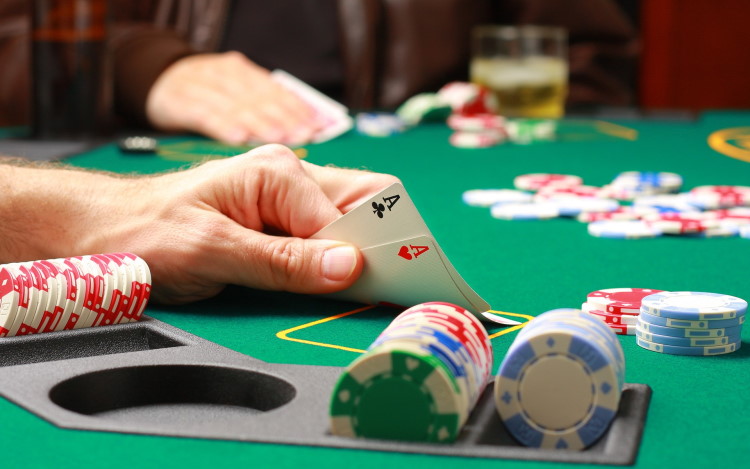
While traditional casino table games pit the player directly against the house, casino poker variations like Texas Holdem pit players against one another, with the house taking a small administrative fee known as the rake. In poker, probability dictates the hierarchical ranking of winning hands and the calculation of pot odds.
The ranking of poker hands is organized in direct inverse proportion to their mathematical probability of occurring. The rarer a combination of cards is to construct using combinatorics, the higher it sits on the food chain of victory.
To calculate the total number of unique five-card poker hands that can be dealt from a standard fifty-two-card deck, mathematicians use the combination formula:
Plugging in fifty-two for $n$ and five for $k$ yields exactly two million, five hundred and ninety-eight thousand, nine hundred and sixty unique possible outcomes.
-
The Royal Flush: This represents the rarest possible combination in the game, consisting of the Ten, Jack, Queen, King, and Ace of a singular identical suit. Because there are only four unique ways to build this hand out of the two point six million possibilities, the probability of being dealt a natural royal flush is an astronomical zero point zero zero zero one five four percent.
-
The One-Pair Hand: In stark contrast, there are over one million unique ways to construct a standard one-pair hand, giving it a high probability of roughly forty-two percent, which is why it sits near the bottom of the hand rankings.
Expected Value and Rational Decision Making
For an analytical player, the ultimate application of probability theory at the card table is the calculation of Expected Value. Expected Value is a mathematical metric that determines the average return or loss that a specific decision will yield over an infinite number of identical repetitions. It is calculated by multiplying the probability of a winning outcome by the total amount to be won, and subtracting the probability of a losing outcome multiplied by the amount to be risked.
Decisions in card games can be classified into two clear financial categories:
-
Positive Expected Value (+EV): A decision that will mathematically generate a net profit over the long haul, regardless of whether the immediate individual hand wins or loses.
-
Negative Expected Value (-EV): A decision that will systematically drain capital over time, even if it occasionally results in a lucky short-term win.
For example, in blackjack, when a player faces a hard sixteen against a dealer’s up-card of ten, basic strategy dictates that the player must hit. Standing on a sixteen presents an expected value of roughly minus fifty-six cents on a one-dollar bet, meaning you lose fifty-six percent of your money over time. Hitting on that exact same sixteen presents an expected value of roughly minus fifty-one cents. While both options represent a losing scenario, hitting is the mathematically correct decision because it minimizes your expected losses by five cents per dollar, optimizing your bankroll longevity.
Frequently Asked Questions
What is the gambler’s fallacy and how does it trick card players?
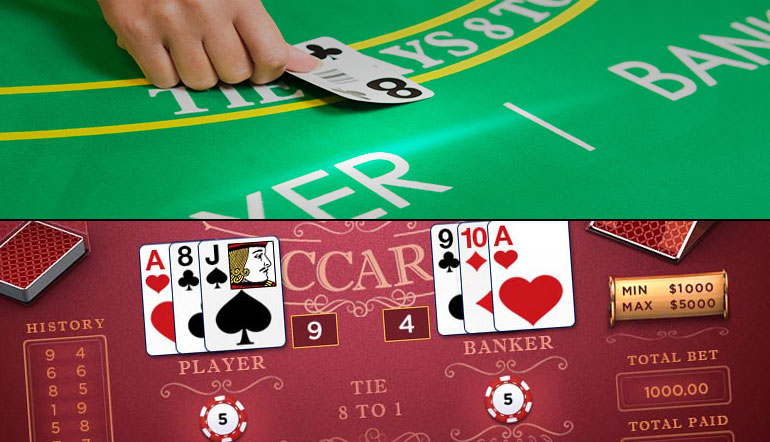
The gambler’s fallacy is the cognitive bias where a player mistakenly believes that a past sequence of independent random events influences future outcomes. For example, if a baccarat table records eight consecutive wins for the Banker side, an uneducated player will wager heavily on the Player side, falsely believing that the universe is due to correct the balance. In reality, the mathematical probability of each independent hand remains completely static and reset to its baseline percentage every single round.
How does the number of decks used in blackjack alter the mathematical probability?
Increasing the number of decks in a blackjack shoe automatically increases the house edge by altering the probability of drawing specific card combinations. In a single-deck game, if you receive an Ace as your first card, the probability of drawing a ten-value card on the next draw is exactly sixteen out of fifty-one. In an eight-deck shoe, drawing that first Ace leaves one hundred and twenty-eight ten-value cards out of four hundred and fifteen total remaining cards, slightly lowering your statistical odds of hitting a natural blackjack.
What are pot odds in poker and how are they calculated?
Pot odds represent the mathematical ratio between the total amount of money currently in the betting pot and the specific cost of a required bet to stay in the hand. For example, if the pot contains one hundred dollars and an opponent bets twenty dollars, the total pot is now one hundred and twenty dollars, and it costs you twenty dollars to call. Your pot odds are one hundred and twenty to twenty, which simplifies to six to one. If your probability of hitting your winning card combination is better than these odds, calling is a positive expected value decision.
Why do casinos offer insurance side bets in blackjack if they favor the player?
Insurance in blackjack is a classic mathematical illusion engineered to exploit a player’s fear of losing. When the dealer shows an Ace, they offer insurance, which pays two to one if the dealer has a ten-value card in the hole to complete a natural blackjack. However, the true mathematical odds of the dealer holding a ten are roughly two to one against, meaning the payout ratio does not match the actual risk probability. Insurance carries a heavy house edge of over seven percent, making it a negative expected value choice.
What is a yield percentage or return to player metric in card games?
Return to Player is the theoretical percentage of all wagered money that a specific casino game will pay back to participants over an extended timeline. For instance, if a card game features a structured house edge of one point five percent, its theoretical Return to Player metric is ninety-eight point five percent. This means that across millions of total historical rounds, the player community will collectively retain ninety-eight dollars and fifty cents of every one hundred dollars risked, while the house absorbs the remaining one dollar and fifty cents.
How does card counting actually shift the house edge back to the player?
Card counting does not require memorizing every single card dealt from the shoe. Instead, it utilizes a relative point tracking system to monitor the ratio of high cards to low cards remaining in the deck. When the system alerts the counter that the deck is heavily dense with aces and tens, the player dramatically scales up their bet sizing. By risking significantly more money when the mathematical probability favors the player, and minimum amounts when it favors the house, the counter fully neutralizes the baseline house edge.