 By Jacob Ella
Poker is a beautiful, deeply complex game defined by a unique paradox. It is a game of high skill where players must navigate mathematics, psychology, and strategic asset allocation. Yet, over a short timeline, the structural outcome of any individual hand is entirely at the mercy of absolute randomness. A player can execute every single decision with absolute perfection, manipulate their opponent flawlessly, and slide their chips into the middle of the table with a ninety-nine percent statistical advantage, only to watch the final card on the river destroy their hand.
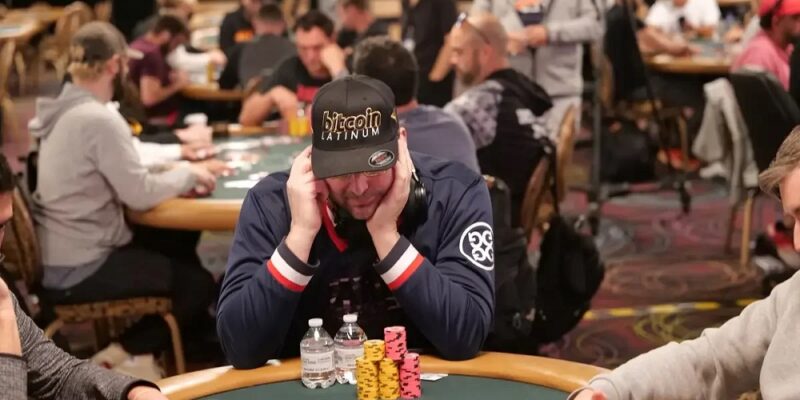
In poker vocabulary, this scenario is known as a bad beat. Experiencing a brutal statistical anomaly is an unyielding, non-negotiable reality for anyone who sits at a card table. While the math behind the cards eventually smooths out across a long calendar year, the immediate emotional response to losing a massive pot can be psychologically devastating.
When a player lets visceral frustration dictate their subsequent decisions, they enter a state known as tilt. Recognizing the warning signs of mental tilt and cultivating absolute psychological resilience are the true delineations between a recreational player who panics and an analytical professional who maintains long-term profitability.
The Anatomy of a Bad Beat and Variance Realities
To build a robust mental armor against bad beats, you must first demystify them through the lens of pure statistics. A bad beat occurs when a heavily favored hand loses to an underdog hand after all or most of the money has been committed to the pot.
The primary catalyst for emotional suffering at the table is the human ego interpreting a bad beat as a personal insult, a conspiracy, or a statistical impossibility. This reaction is a fundamental misunderstanding of probability. If an opponent has a two percent chance to hit their specific card on the river, that does not mean it cannot happen. It means that across one hundred identical scenarios, they will mathematically triumph exactly twice. You happened to be sitting in the chair during one of those two instances.
In the grand architecture of poker, this short-term volatility is known as variance. Variance is the lifeblood of the entire poker ecosystem. If the superior hand won one hundred percent of the time, uneducated or unskilled players would realize they have no chance of winning and would quickly stop risking their money. The fact that an amateur can occasionally hit a miracle card to win a massive pot keeps them returning to the table, feeding the game long-term. A professional does not view a bad beat as a tragedy; they recognize it as the necessary cost of keeping the ecosystem alive.
Deconstructing Tilt and the Loss of Rationality
Mental tilt is a neurological hijack. When you experience a shocking bad beat, your primitive brain perceives the loss of chips as an immediate, visceral threat to your survival, activating the limbic system. Adrenaline and cortisol flood your bloodstream, causing your heart rate to spike and your breathing to shallow.
This physiological reaction causes your prefrontal cortex—the structural area of the brain responsible for impulse control, complex mathematical calculations, and logical long-term planning—to partially shut down. When you play poker under the influence of this biological cocktail, your strategic capacity drops precipitously.
Tilt manifests in a variety of distinct behavioral archetypes:
-
The Aggressive Steam Tilt: The most common form, where a player attempts to win back their lost capital instantly by over-bluffing, playing too many marginal hands, and aggressively raising out of pure anger.
-
The Passive Entidement Tilt: A state where a player feels victimized by the deck. They begin to play defensively, refusing to value-bet their strong hands because they are convinced they will inevitably get unlucky again.
-
The Exhaustion Over-Stay Tilt: Refusing to walk away from a session, staying at the table for twelve or fourteen consecutive hours in a physically compromised state, chasing the psychological relief of breaking even.
Proactive Strategies for Real-Time Emotional Regulation
Relying entirely on sheer willpower to fight a biological stress response during a live game is a losing battle. Instead, you must implement a structured, real-time operating protocol to actively lower your physical arousal levels the moment a bad beat occurs.
-
The Tactical Breath Reset: The physical body and the emotional mind operate in a continuous feedback loop. When a bad beat lands, immediately implement box breathing: inhale deeply through your nose for a count of four, hold the breath for four, exhale slowly through your mouth for four, and hold empty for four. This mechanical manipulation signals to your nervous system that you are safe, suppressing the adrenaline surge before it paralyzes your analytical systems.
-
The Internal Process Audit: Shift your evaluative metrics away from the monetary outcome of the hand toward the execution quality of your decision. Ask yourself objectively: Did I analyze the ranges correctly? Did I size my bet to extract maximum value? If the answer is yes, you have won the only battle that matters. You executed a positive expected value decision. The short-term card delivery is completely outside your jurisdiction.
-
The Logic Injection Phrase: Create a short, objective mantra to repeat silently to yourself when you feel your emotions swelling. Phrases such as “This is variance, and I am built to absorb it” or “I am here for the macro-data, not individual hands” serve as external anchor points, pulling your consciousness out of the emotional past and forcing it back into the analytical present.
Establishing External Structural Safeguards
Even the most self-aware players in the world will occasionally find themselves overwhelmed by frustration. To ensure that an localized emotional lapse does not permanently cripple your long-term poker career, you must build rigid external safeguards that physically prevent you from destroying your bankroll.
-
The Stop-Loss Mechanism: Establish a strict, non-negotiable financial ceiling for every individual session. For instance, if you are playing online cash games, set a personal rule that if you lose three full buy-ins, you are legally obligated to close the application immediately. If playing live, the moment that third stack dissolves, you stand up, walk to the cage, and leave the property.
-
The Time-Out Protocol: If you suffer a highly frustrating bad beat but choose not to exit the game entirely, you must take a mandatory minimum ten-minute break. Walk away from the table, step outside into fresh air, drink a full glass of water, and completely disconnect your eyes from the cards. Do not use this time to complain about the hand to friends or replay the bad luck in your head; focus entirely on returning your resting heart rate to normal before reclaiming your seat.
-
Aggressive Bankroll Buffering: Emotional volatility is heavily magnified when you are playing with capital you cannot afford to lose. If your poker bankroll is too shallow, losing a single big pot feels like a life catastrophe. By maintaining an incredibly conservative bankroll cushion—such as keeping fifty to one hundred full buy-ins for your specific stakes—the financial weight of an individual bad beat is mathematically neutralized, allowing you to view your chips as abstract strategic tools rather than actual currency.
Frequently Asked Questions
What is the difference between visible tilt and silent tilt?
Visible tilt is easily recognizable; it involves overt physical displays of anger, such as verbal complaining, slamming chips, or fast, aggressive play patterns. Silent tilt, often called running bad tilt, is far more insidious. The player appears calm on the outside, but they have subconsciously checked out of the game, making subtle, passive errors like missing profitable value bets, over-folding to standard pressure, or failing to track player dynamics due to mental exhaustion.
How can I stop obsessing over a bad beat hours after the session has ended?
The most effective way to eliminate lingering mental loop cycles is through objective documentation. Write down the hand history step-by-step or analyze it using a solver tool. By translating an emotional memory into cold, hard data points, you allow your brain to process and archive the event completely. Once you prove mathematically that your play was correct and that the loss was a standard variance fluctuation, your mind will naturally release the emotional attachment.
Should I tell other players at the table about my bad beats?
Absolutely not. Sharing bad beat stories at the card table serves zero analytical purpose and actually hurts your standing in two ways. First, other players genuinely do not care about your bad luck, and vocalizing your frustration alerts skilled opponents that you are emotionally compromised and ripe for strategic exploitation. Second, speaking about the loss aloud keeps your brain anchored in the negative past, prolonging your recovery time.
Why do I feel like I get hit with bad beats far more often than my opponents?
This is caused by a well-documented psychological phenomenon known as availability bias or negativity bias. The human mind is naturally engineered to remember negative or painful events with extreme clarity as a survival mechanism, while effortlessly forgetting positive or standard events. You vividly recall the times your pocket aces were cracked on the river, but you completely forget the hundreds of routine hands where your high pairs held up exactly as the math predicted.
Is it a good idea to play lower stakes after suffering a major downswing?
Yes, dropping down in stakes, commonly known as moving down in limits, is an excellent tactical move. It achieves two primary goals: it protects your physical bankroll from further damage during a period of high variance, and it lowers the psychological pressure. Playing against less skilled opponents at lower financial stakes allows you to secure easy wins, rebuilding your confidence and mental clarity before returning to your primary limits.
How long does it typically take for the brain to completely recover from tilt?
From a biological standpoint, once the acute stress response is triggered by a bad beat, it takes the human body roughly twenty to forty minutes to completely clear stress hormones like adrenaline from the system, provided no further stressors occur. However, if you remain seated at the table and continue to dwell on the loss, you reset that internal clock continuously, trapping yourself in a prolonged state of cognitive impairment for hours.